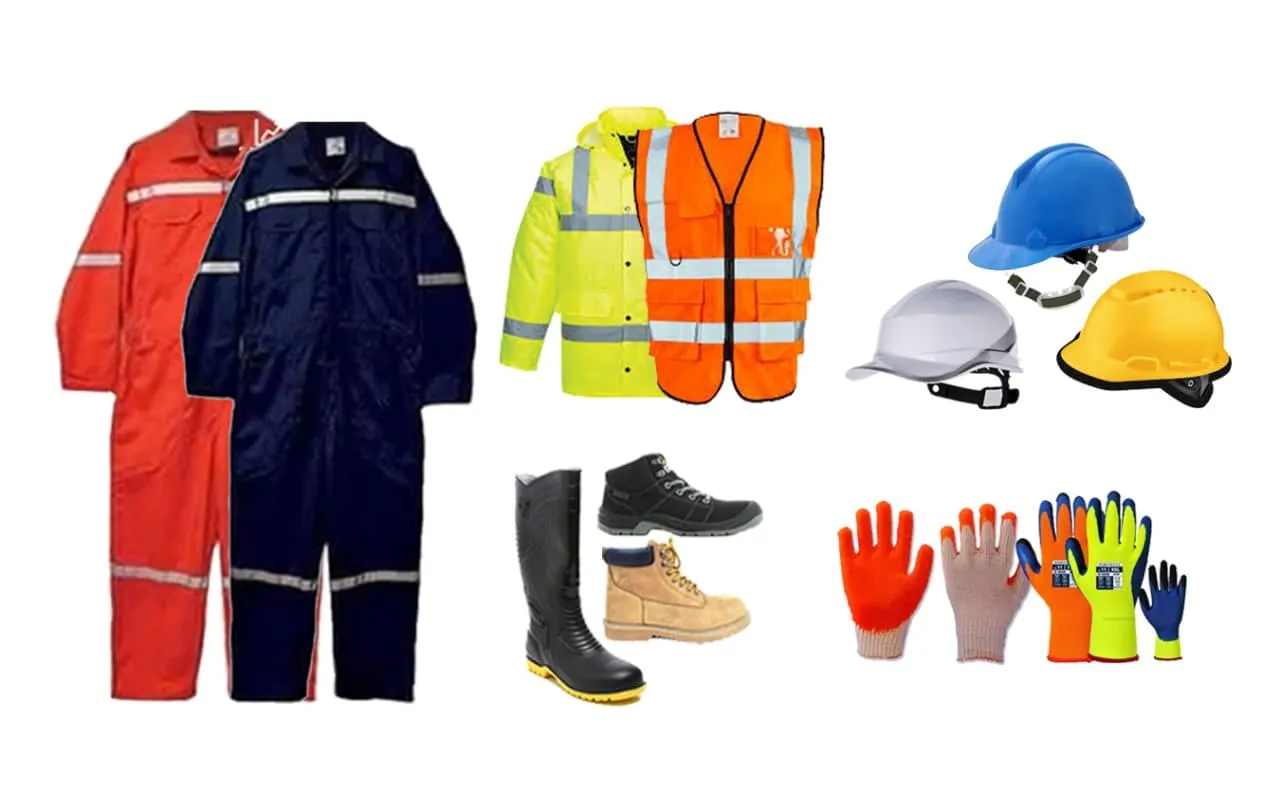
Personal protective equipment is the last thing between a worker and an injury. It does not replace guard rails, edge protection, machine guards or good housekeeping, but when those are in place it covers what is left. The trouble is that one standard kit rarely suits every job. A mason on a slab in Kasoa, a welder in a fabrication shop at Kumasi and a forklift driver in a Tema warehouse face different hazards and need different gear.
This guide goes through the main work environments we supply in Ghana and the PPE each one usually needs. Start with the hazards on your own site, then use this as a checklist.
Start with the hazards, then pick the gear
Walk the site or workshop and write down what can hurt someone: things falling from above, flying chips, dust, noise, wet or uneven ground, traffic, chemicals and work at height. Each hazard points to a part of the body, and each part of the body has its own kind of protection.
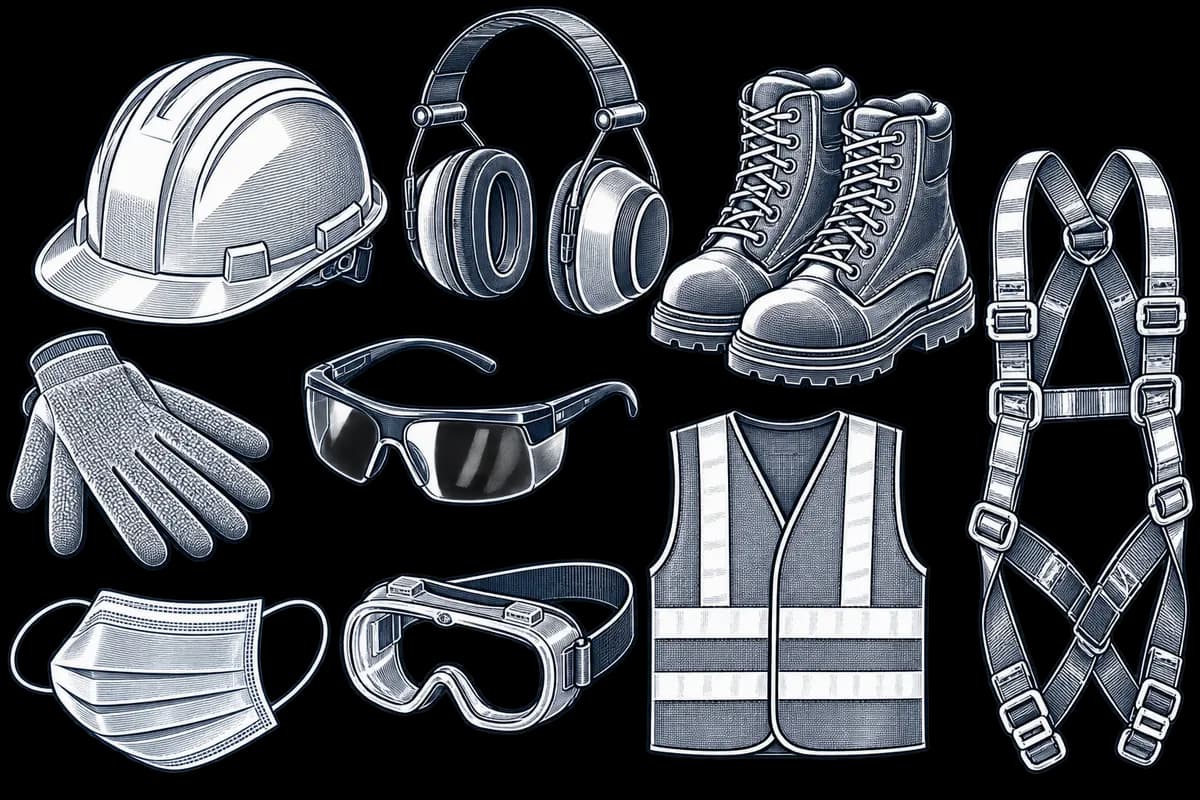
It helps to think of PPE by body area: head, eyes and face, hearing, breathing, hands, feet, body, and fall protection for anyone working off the ground. Go through that list for every job, not just once for the whole company.
Construction sites
On a building site the biggest risks are falling objects, nails and rebar underfoot, cement and dust, and falls from scaffolds and roofs. Everyone on site should wear a safety helmet and safety boots with a protective toe cap. Gumboots are the better choice for concrete pours and wet ground.
Add a hi-vis vest wherever trucks, tippers or excavators are moving. Give block cutters and anyone mixing cement a dust mask and safety glasses. Anyone working on scaffolding, roofs or open edges needs a full-body harness with a lanyard clipped to a proper anchor point.
Workshops and fabrication
Grinding, cutting and drilling throw out hot sparks and metal chips. Safety glasses are the minimum, and a face shield worn over them is better for angle grinders. Goggles suit dusty or splashy jobs where glasses leave gaps.
Compressors, grinders and generators are loud enough to damage hearing over a working day. Keep ear plugs on hand for short jobs and ear muffs for anyone who works near the noise all day. Leather work gloves protect hands from sharp edges and hot metal, and a coverall keeps sparks off skin and clothing.
Mining and quarrying
Quarries and mines combine most hazards at once: heavy plant, rock fall, blasting, constant noise and fine dust. Helmets and safety boots are a given. Hearing protection matters more here than almost anywhere, so plan for ear muffs on every worker near crushers, drills and haul trucks.
Silica and rock dust do lasting damage to the lungs. Disposable dust masks suit short, light exposure. For drilling, crushing or long shifts in dust, a reusable half-mask respirator with the right filters gives a better seal. Hi-vis vests or coveralls with reflective tape help drivers see people on haul roads.
Oil and gas yards and coastal sites
In Takoradi, Tema and other coastal yards, workers face heat, salt air, wet decks, chemicals and lifting operations. Coveralls with reflective tape are common because they cover the whole body and stay visible. Gumboots or safety boots with a good grip sole help on wet and oily surfaces.
Where chemicals, fuels or cleaning agents are handled, use rubber or chemical-resistant gloves, goggles and a face shield. Harnesses and lanyards are needed for work on tanks, racks and platforms. Many operators and clients here name the exact standard their PPE must meet, so check your contract before you order.
Warehouses and stores
Warehouses look safer, but forklifts, falling stock and heavy lifting cause many injuries. Safety shoes protect against dropped loads and pallet edges. Hi-vis vests make people easy to see in aisles where forklifts work. Work gloves help when handling pallets, steel and packaged goods, and a helmet is worth wearing where goods are stacked high.
Fit matters as much as the product
PPE that does not fit does not protect. A helmet should sit level and the harness inside should be adjusted so it stays on when the wearer bends over. Gloves should be snug without stopping the hand from closing. Dust masks and respirators only work if they seal around the face, which a beard or a loose strap can prevent.
Check that items work together. Safety glasses should not lift a respirator off the face, and ear muffs should fit with the helmet the worker actually wears. Order sizes for your actual crew instead of one size for everyone.
Care, checks and when to replace
Ask workers to look over their PPE before each shift. Replace a helmet that is cracked, faded or has taken a heavy blow, even if it looks fine. Throw out disposable masks and foam ear plugs after use or when they are dirty. Replace glasses and visors once scratches make them hard to see through.
Store harnesses and lanyards dry and out of the sun, and take any with cuts, frayed stitching or damaged hooks out of service straight away. A harness that has stopped a fall should not be used again. Keep a few spares of the items people lose or wear out fastest, such as gloves, ear plugs and masks.
Ordering PPE from SaaBrown
We supply helmets, safety boots and gumboots, gloves, eye and face protection, ear protection, dust masks and respirators, hi-vis vests, coveralls, harnesses and lanyards from Timber Market in Accra, with delivery across Ghana. If your site or client asks for a particular safety standard, tell us which one when you request a quote and we will confirm what we can supply.
Add the items and sizes you need to your quote list, or send a full list for the whole crew through our bulk quote form. You can put PPE on the same quote as your fasteners and fixings.
Ready to order? Browse the catalog and send your list for a quote.
Browse Products